On this page
Neither PEVA nor aluminum foil lining is universally better for every insulated bag. PEVA is commonly considered when buyers want a smooth, flexible and easy-to-clean inner surface, while aluminum foil lining may be selected when its reflective appearance fits the approved specification. The final choice depends on the intended bag type, cleaning expectations, finished appearance and full construction. Most importantly, lining material alone does not determine thermal performance: insulation foam, thickness, seam construction, closure, bag structure, intended use and test conditions all matter.
Key Takeaways
- Compare the full lining and insulation structure, not only the visible inner surface.
- PEVA and foil constructions can suit different product positions and cleaning needs.
- Ask for a production-representative sample before approving a material choice.
- Seams, foam and closure affect practical thermal performance.
What Is PEVA Lining?
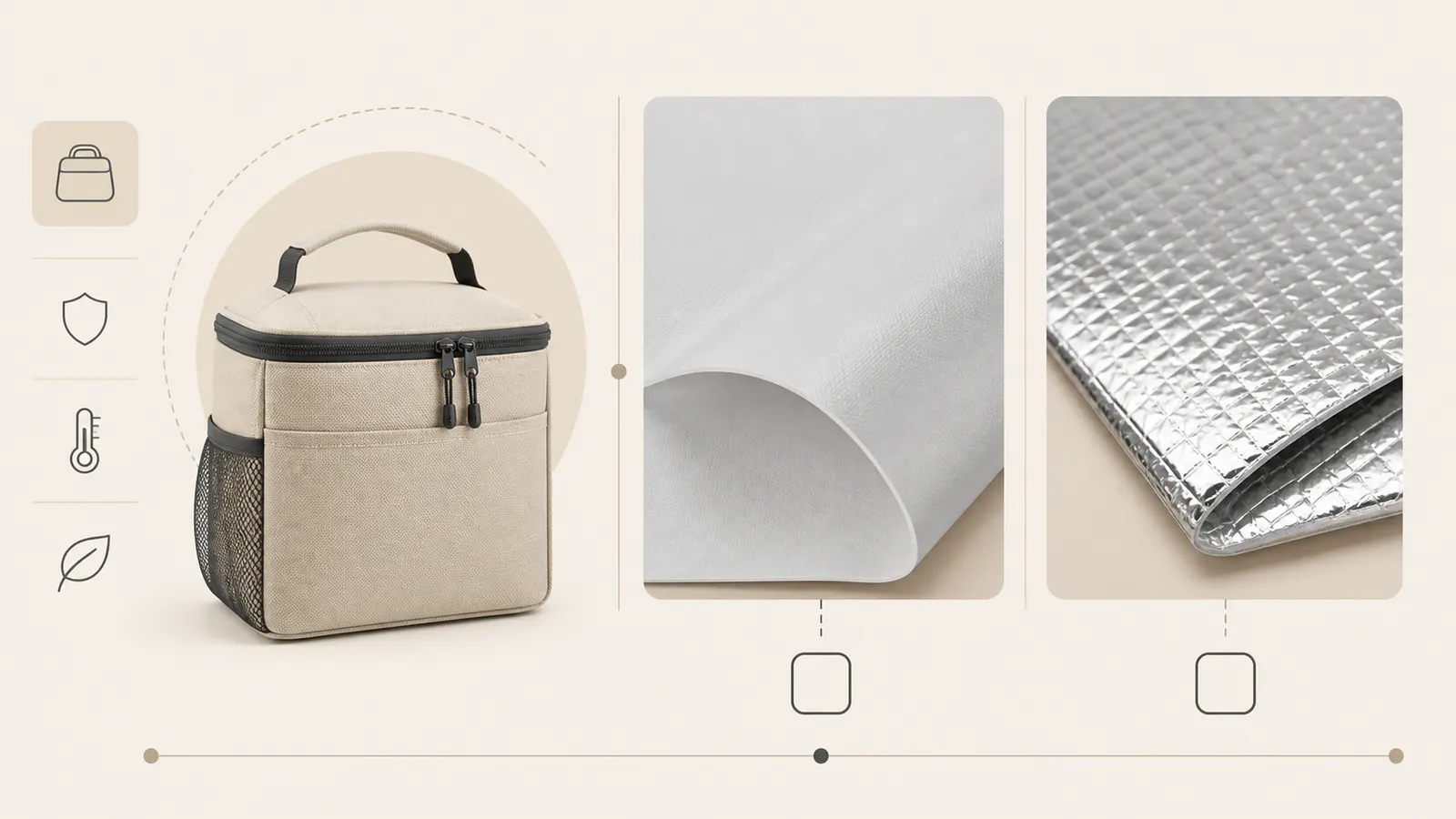
PEVA lining is a flexible polymer film used as an inner surface in many insulated bags. Buyers commonly evaluate it for its smooth feel, flexibility and ease of wiping clean.
Its suitability still depends on the complete bag construction and intended use. Discuss the exact lining structure, attachment method and sample appearance with the manufacturer rather than assuming all PEVA linings perform the same way.
What Is Aluminum Foil Lining?
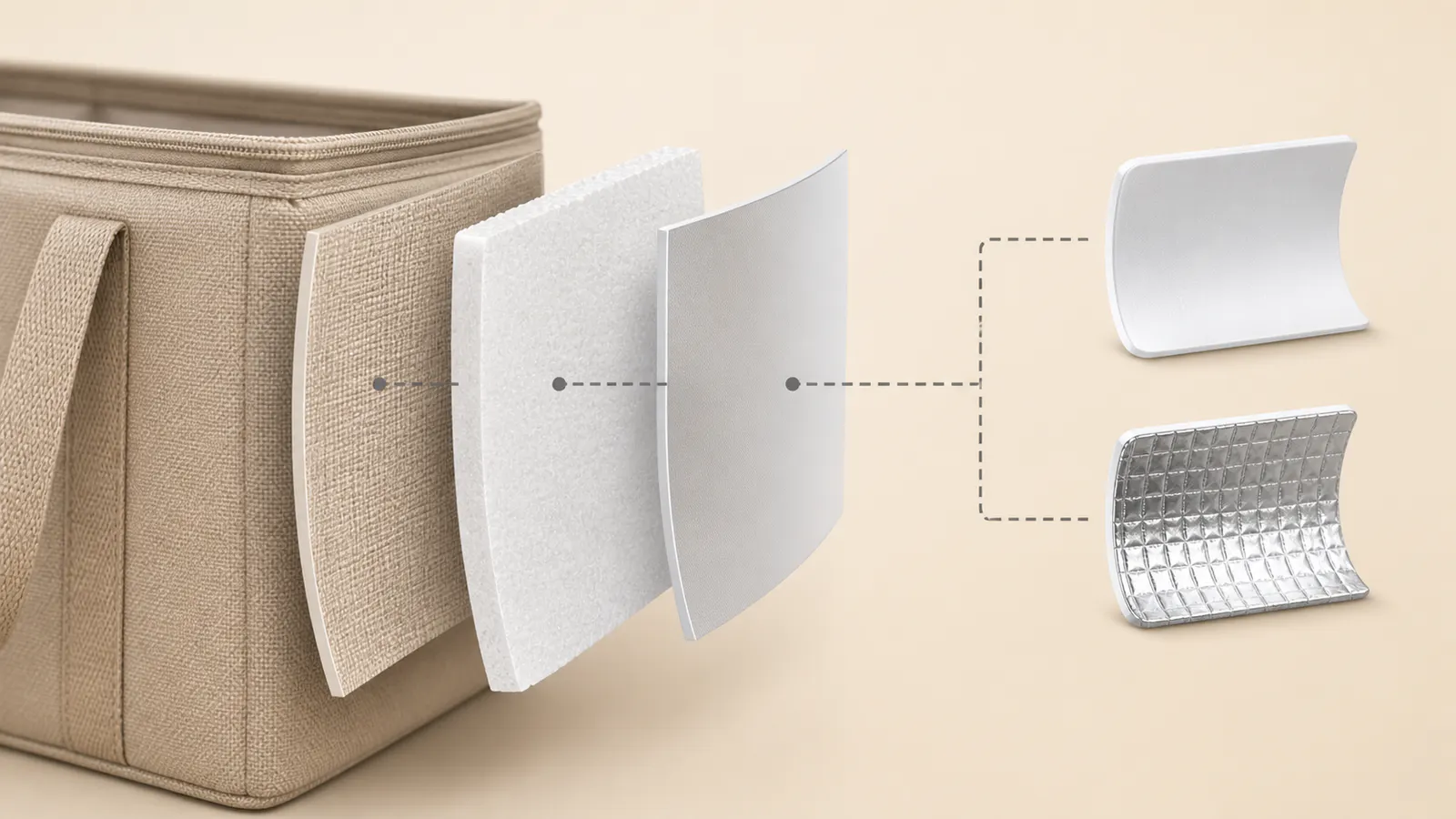
In insulated bags, “aluminum foil lining” usually refers to a reflective foil layer incorporated into a laminated lining structure. It is not normally a loose sheet of household foil placed inside a bag.
Buyers should confirm the backing material, lamination and how the lining is finished at seams and openings. Those details affect how the finished product looks and wears in use.
PEVA vs Aluminum Foil: Quick Comparison
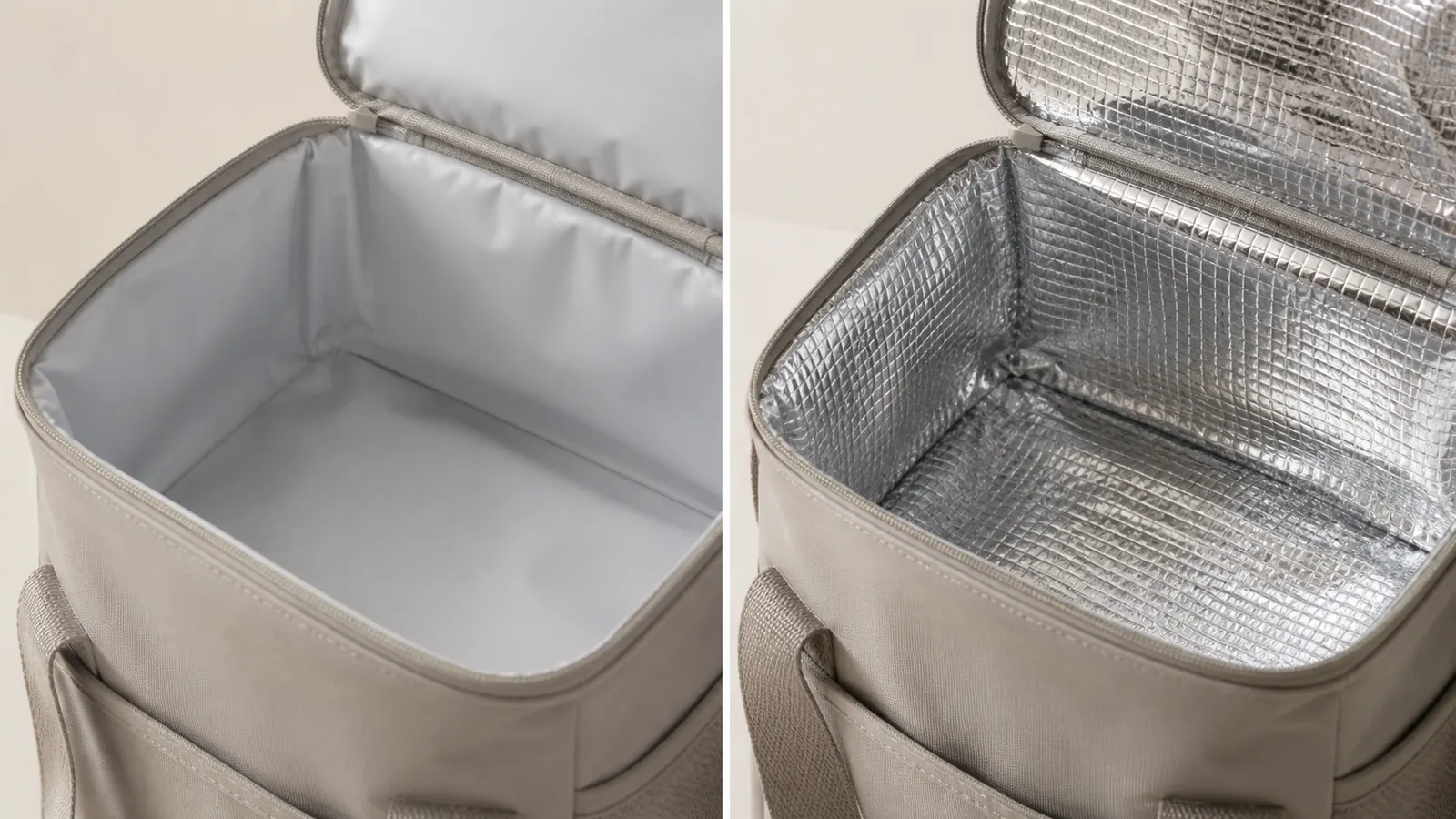
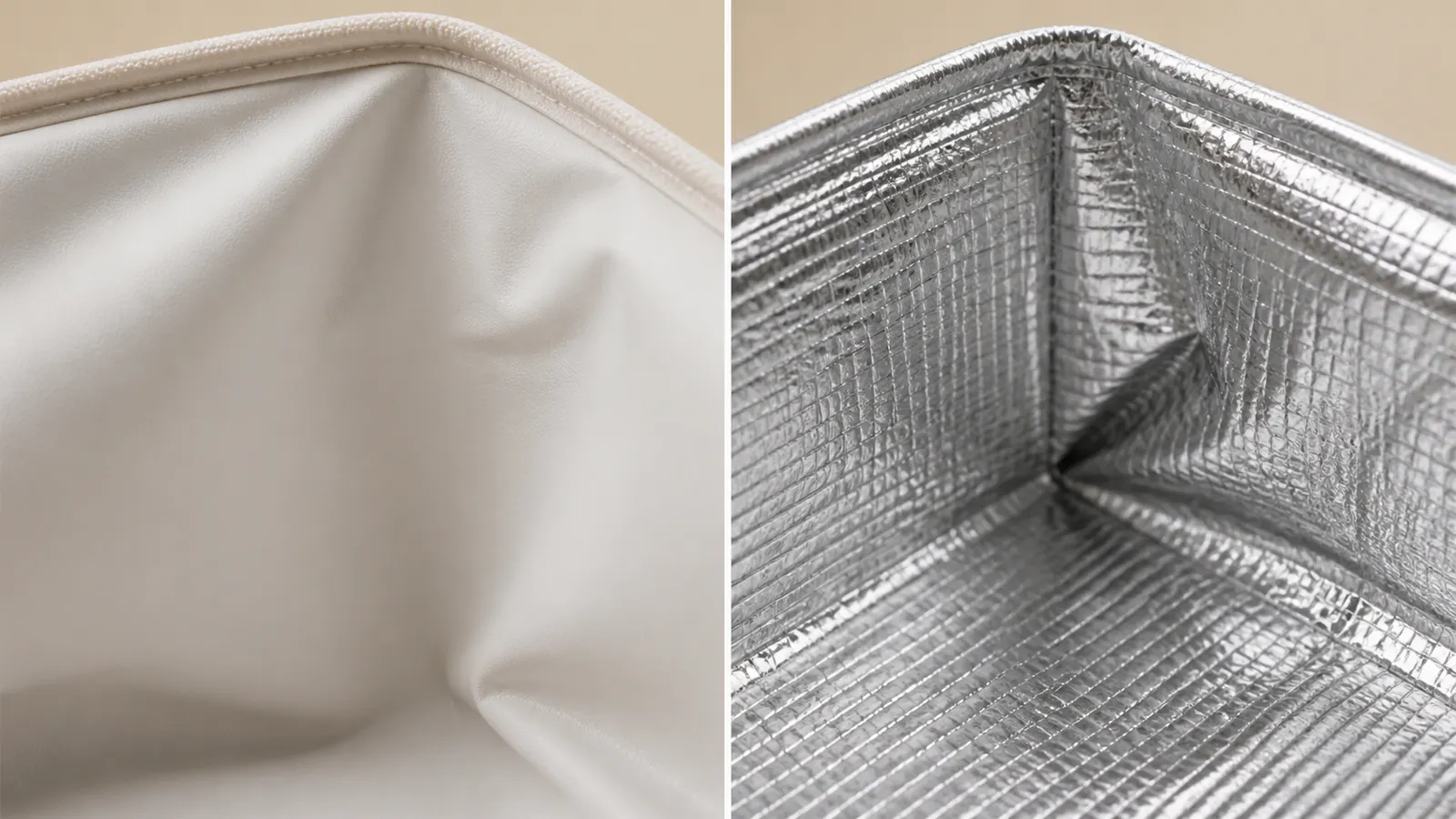
PEVA and foil linings differ most visibly in surface feel and appearance. The best sourcing decision should also consider the bag structure and the product brief.
| Factor | PEVA lining | Aluminum foil lining |
|---|---|---|
| Surface | Smooth film surface | Reflective laminated surface |
| Appearance | Soft, neutral interior look | Silver, reflective interior look |
| Flexibility | Flexible film; confirm the full construction | Depends on the laminate and backing |
| Cleaning | Often considered for wipe-down use | Confirm laminate and seam finish |
| Construction | Review backing and attachment | Review laminate, backing and seam finish |
| Thermal-performance considerations | Thermal performance depends on the complete structure, including insulation foam, thickness, seams, closure, bag structure, intended use and test conditions. | |
| Sourcing considerations | Confirm the approved sample, complete specification and like-for-like quoted construction before selection. | |
How Do PEVA and Aluminum Foil Differ in Practice?
Cleaning
PEVA is often selected when an easy-to-wipe inner surface is a priority. That is a practical sourcing preference, not a guarantee about every construction.
Ask how seams are finished and where the lining is joined to the shell, because those areas affect cleaning expectations. Put the intended cleaning method into the product brief and sample review notes.
Appearance
PEVA generally creates a softer, more understated interior appearance, while foil creates a visibly reflective silver look. Neither look is inherently more premium; the right choice depends on brand positioning and the exterior material.
Review both options in a sample under normal product photography and retail lighting before approval.
Construction
The final choice should match the bag brief and the complete construction. Review foam, closure, seams, interior finish and the approved sample alongside the lining material.
Does Lining Material Alone Determine Insulation Performance?
No. Lining material alone does not determine how an insulated bag performs in use.
Foam insulation, thickness, seam construction, zipper or closure, bag shape, intended use and testing conditions all matter. Buyers should compare complete samples built to the proposed specification, rather than choosing a lining from appearance alone.
What Buyers Should Confirm Before Approving a Lining
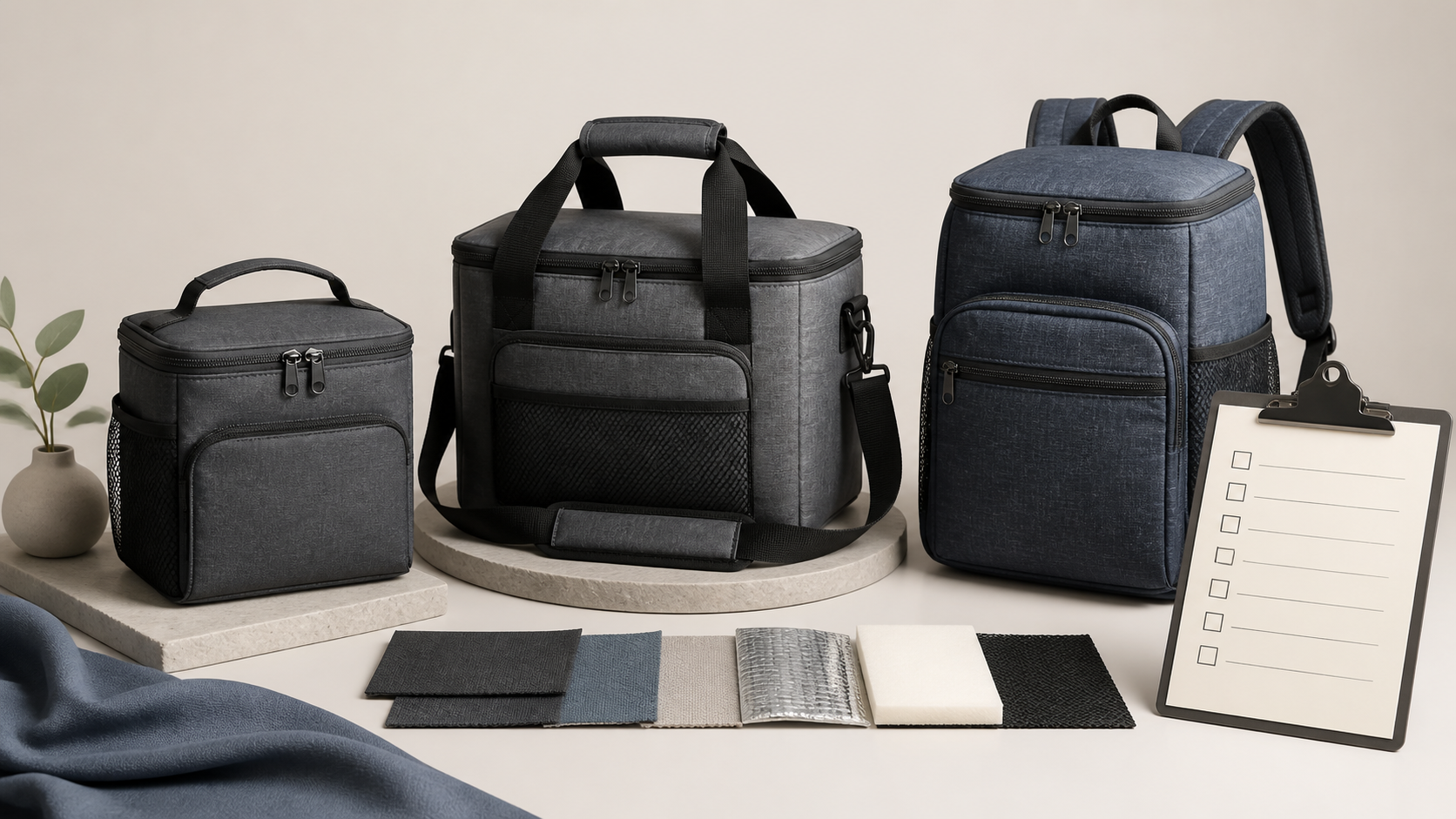
Buyers get a more useful answer when they ask about the whole inner construction. A written checklist helps keep the sample and bulk specification aligned.
- What is the full lining structure?
- What insulation foam is used?
- How are seams finished?
- How is the lining attached?
- Is the sample using the same structure as bulk production?
- What cleaning expectations should be communicated?
- Are there cost differences between like-for-like options?
Choose based on the intended bag, intended use, desired interior appearance, cleaning expectations and approved full construction. Do not select lining based on insulation assumptions alone.
For a broader sourcing review, see How to Choose an Insulated Bag Manufacturer: 8 Factors Buyers Should Check, our Custom Manufacturing overview and Factory & Quality page.
Buyer checklist
- Is the interior finish suitable for the intended use?
- Is the quoted structure the same as the approved sample?
- What foam, seam and closure construction is specified?
- Does the interior appearance match the product position?
- What is included in the like-for-like cost comparison?
FAQ
Is PEVA better than aluminum foil for cooler bags?
Not in every case. Compare the full cooler bag construction, intended use and approved sample.
Is aluminum foil lining enough to keep food cold?
No. Thermal performance depends on the complete bag structure and conditions of use.
Does PEVA lining make a bag leakproof?
Do not assume that. Leak resistance depends on the complete construction, seams and closures.
Which lining is easier to clean?
PEVA is commonly selected for a smooth wipeable interior, but buyers should confirm the finished construction.
Which lining is better for promotional insulated bags?
Choose based on the required look, project cost and the complete specification.
Conclusion
PEVA and aluminum foil linings should be evaluated as part of a complete insulated bag construction. Compare samples, clarify the full material stack and record the approved specification before bulk production.
If you are comparing PEVA and aluminum foil lining for a custom insulated bag project, send PINGEBAG your bag type, intended use, dimensions, lining or material preference, order quantity, logo requirements, destination market and target price if available for a material and construction review.
Prepared by: PINGEBAG Editorial Team
Topic: Insulated Bag Materials
Last Updated: August 31, 2026